Chancellor Gives AI Mandate. The Hard Work Starts Now.
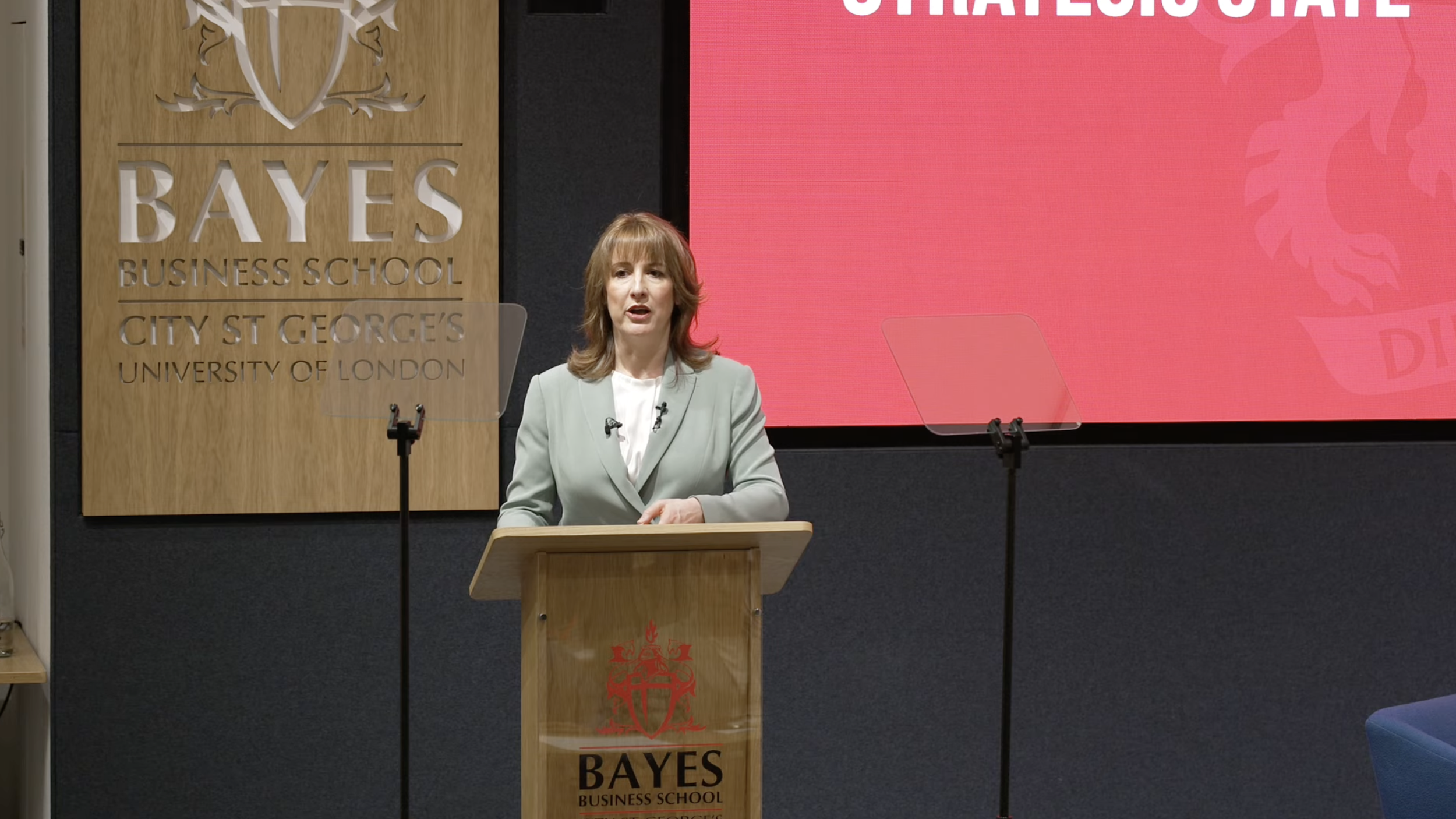
Rachel Reeves made the 2026 Mais Lecture at Bayes Business School today and said something I have been waiting to hear from a Chancellor for years.
"We can bury our heads in the sand and leave it to other countries, whose values may differ from ours, to shape and own this technology. Or we can chart our own course."
And with it came a whole series of commitments around AI in a policy that could set the UK on an exciting AI growth path.
What was actually said
The headline numbers the Chancellor outlined are significant. UK AI startups raised £6 billion in venture capital last year. In the first three months of 2026 alone, they have already raised more than half that figure again. Every major AI lab is either establishing or expanding here in the UK.
On top of that: a £500 million Sovereign AI Fund, a £1 billion programme to procure advanced quantum computers, and an unambiguous commitment to achieve the fastest AI adoption in the G7.
But it was the framing underneath the numbers that deserves more attention than the numbers themselves.
Reeves described AI as "an invention in the very method of invention." Not just a productivity tool. A structural shift in how ideas are created and how value is built. That is a significant claim, and she is right to make it.
The Leeds dimension
I am a Leeds businesswoman. So I was delighted to hear Reeves, a Leeds MP of sixteen years, mention Leeds specifically as the location for an expanded Northern Square Mile, explicitly positioned as a destination for global financial services.
She committed to a Northern Growth Corridor spanning nine million people across Liverpool, Manchester, Bradford, Leeds, Sheffield and York. And she named a prize: if northern city regions reach just the national productivity average, the UK economy grows by £40 billion.
For organisations in tech or financial services sitting in Yorkshire and across the North, this is not background noise. It is a direct signal that the infrastructure, the capital, and the policy intent are finally being aligned around exactly where you are.
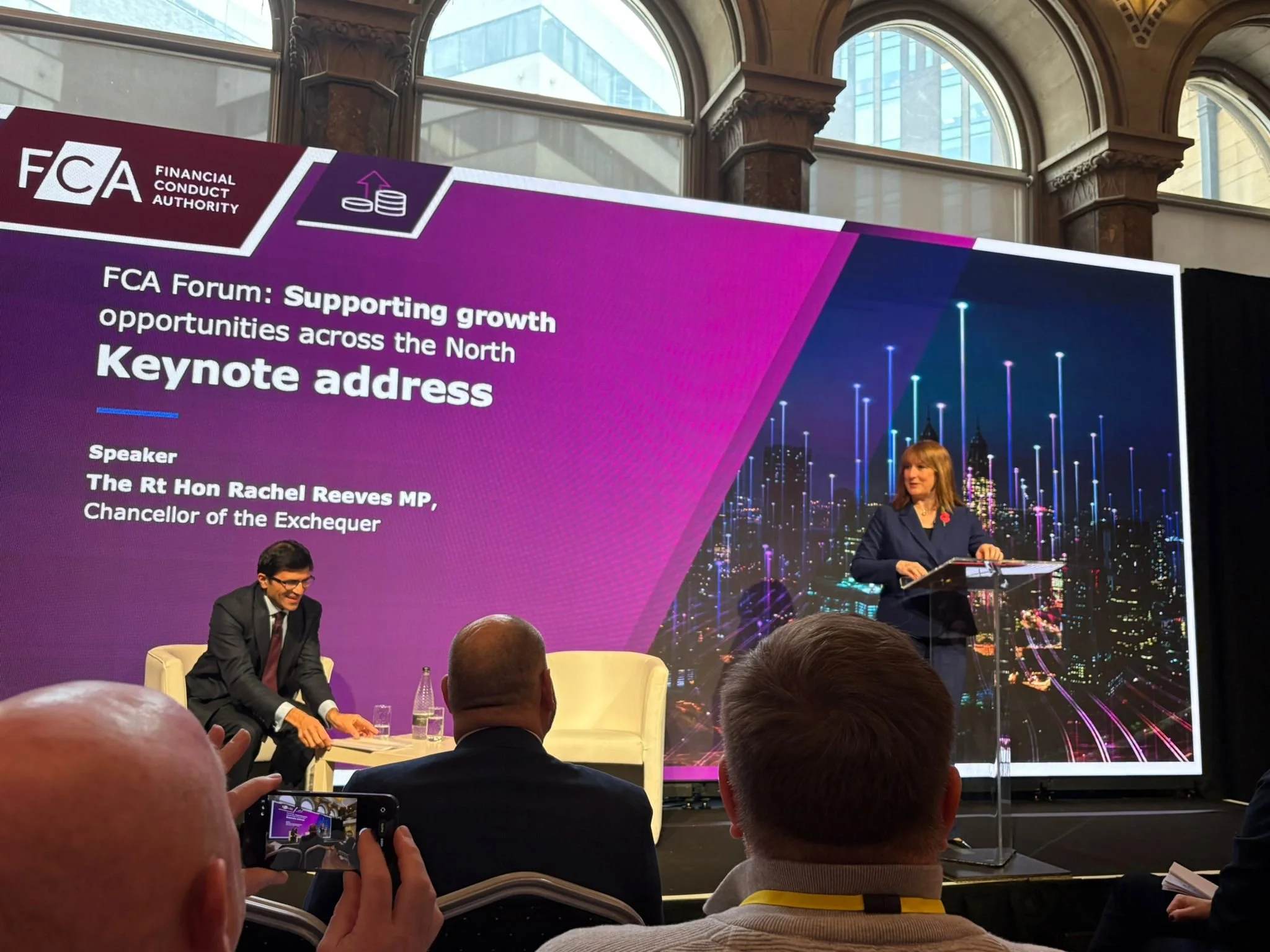
The Chancellor at the FCA Forum in Leeds in October 2025, alongside Zygens.
Why the governance framing matters most
The line about "countries whose values may differ from ours" shaping AI will get less coverage than the investment figures. It should get more.
Reeves was making an assertion that goes beyond speed of adoption. She was making an argument about who controls the governance of this technology, and whose values are embedded in it.
That is the central question in AI right now. Not which model is fastest or cheapest. Not which tool handles the most use cases. But: who is accountable when something goes wrong? What values are embedded in the system making decisions? Can you explain the output to your regulator, your board, your client?
These are the questions that separate organisations building real AI capability from those running pilots and calling it a strategy.
The adoption gap is still a capability problem
Government investment builds infrastructure. It does not build the internal capability your organisation needs to use it.
I have spent more than a decade working inside and alongside regulated organisations. The technology is rarely the bottleneck. What stalls AI programmes is the absence of governance, the lack of clear accountability, the inability to move from an impressive demo to a system that runs safely in production.
Reeves used a phrase that stuck with me: the doctrine of the passive state. The idea that the best thing to do is stand aside and let things happen.
That doctrine failed at the macroeconomic level. It fails at the organisational level too.
Organisations that take a passive approach to AI, waiting for the technology to mature, waiting for competitors to go first, waiting for the regulator to tell them what to do, are not managing risk. They are accumulating it.
What this means if you lead a regulated organisation
The government has named financial services and professional services as priority sectors. It has committed real capital to the northern city regions where many of you operate. It has set a productivity target with a £40 billion prize attached to it.
The question is not whether AI adoption is now a strategic priority. That conversation is settled.
The question is whether your organisation has the governance model to move at pace without introducing risk you cannot manage or explain.
That is a problem that can be solved. It does not require a large budget to begin. It requires clarity of intent, structured discovery, and the right partner.
The organisations that get this right will build something in the next twelve months that becomes a genuine competitive advantage. The ones that treat this as another committee agenda item will be making catch-up decisions in a hurry.
The Chancellor has made her choice. The question is whether you have made yours.
If today's speech has moved AI up your board agenda, our Discovery Programme is designed for exactly this moment. You’ll find structured, governed and practical solutions to shape your business up for the agentic AI world.