AI Is Scaling. Skills Are Not. Are You Fixing the Wrong Thing?
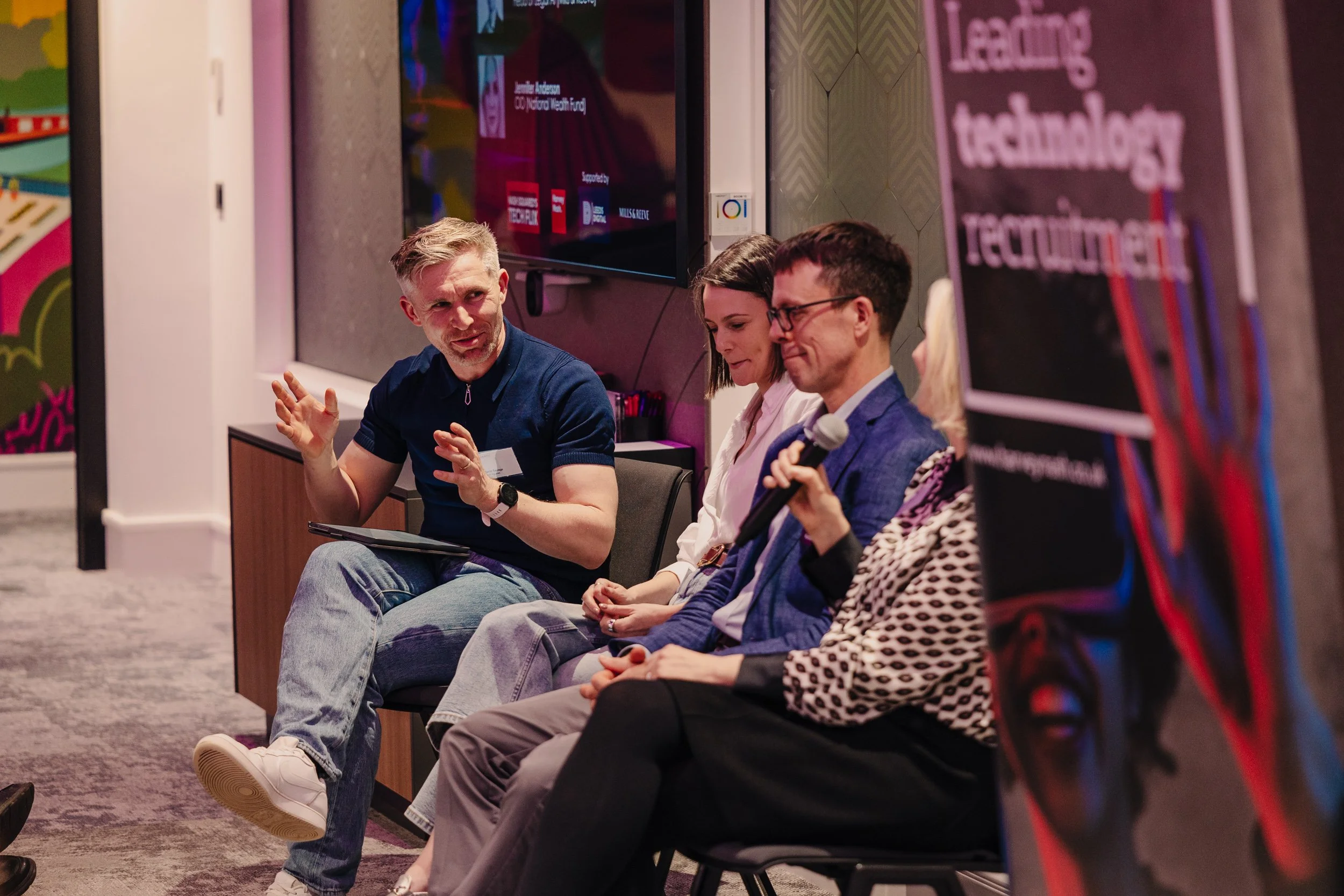
NashSquared’s David Savage and panel discuss the AI skills gap
Most organisations think they have an AI talent problem. They don't. They have an AI understanding problem. And those two things require completely different solutions.
Harvey Nash's Digital Leadership Report recently recorded an 83% year-on-year rise in demand for AI skills, the single biggest increase in any skill set they've ever tracked. And most organisations are responding by trying to hire their way out of it.
A fortnight ago, their Nash Squared team premiered an excellent film documentary at Mills & Reeve's offices in Leeds exploring exactly that gap.
But the most valuable 45 minutes came after the screening. A panel discussion featuring Hannah Bruce, Head of Data Transformation at Lloyds Banking Group; Iain Murdoch, Head of Legal AI at Mills & Reeve; and Jennifer Anderson, CIO at the National Wealth Fund, chaired by the film’s producer/presenter David Savage.
Here's what stood out, and what it means for the organisations we work with at Zygens.
The skills gap isn't what most people think it is
There's a default assumption that closing the AI skills gap means hiring AI specialists: data scientists, ML engineers, prompt engineers. The panel challenged this directly.
Jennifer Anderson made the point that most organisations aren't going to be building large language models. The first step is understanding what type of AI is relevant to your organisation and matching your skills investment to that. For many businesses, that starts with something far more fundamental: helping people understand what the technology actually does, so they can use the tools already available to them effectively.
Iain Murdoch reinforced this from a professional services perspective. If someone understands the basics of how a large language model works, they'll be meaningfully better at using tools like Microsoft Copilot. That doesn't require a computer science degree. It requires a baseline level of technical literacy that most organisations haven't yet provided.
This mirrors what we see consistently at Zygens. The skills gap in most regulated organisations isn't a shortage of AI talent. It's a shortage of AI understanding among the domain experts who already know the business, the regulation, and the workflows. Upskilling those people delivers faster, safer results than hiring specialists who then need months to understand the operating environment.
Mandating AI adoption creates the wrong behaviours
The discussion got particularly sharp when David Savage raised Accenture's reported approach of tying employee promotion to AI usage. The panel's response was unanimous: that's too absolutist.
Iain Murdoch shared how Mills & Reeve handles it. Technology capability is one of four quadrants in their assessment and promotion framework. It's part of the conversation about how people develop and progress, but it isn't a binary gate. The emphasis is on outcomes and team capability rather than tracking individual tool usage.
Jennifer Anderson took a similar view. She wouldn't mandate it but would question anyone not engaging with it. At the National Wealth Fund, the focus is on active learning in whatever form that takes, whether that's AI or other skills relevant to someone's role.
Hannah Bruce described Lloyds' approach of creating AI pathways tailored to different personas within the organisation. The guiding principle: as long as people are actively learning, that's enough.
This aligns with something we talk about at Zygens as the 70/30 rule. 70% of successful AI adoption is people and process. 30% is the technology. You can't mandate culture change. You build it through clear permission to experiment, visible leadership, practical training, and governance that makes people feel safe rather than surveilled.
AI doesn't automatically save money
One of the most striking moments came from Hannah Bruce. Lloyds Banking Group has unlocked £50m in savings through AI. That's a significant, measurable result. But she followed it with a warning that more organisations need to hear: building and maintaining AI solutions can actually increase costs, not reduce them.
The expectation that AI is primarily a cost-reduction tool is widespread, particularly among boards and investors. The reality is more nuanced. AI solutions need monitoring, maintenance, evaluation and ongoing optimisation. The infrastructure required to run them at scale, particularly in regulated environments where governance and auditability are non-negotiable, adds cost that many organisations haven't budgeted for.
Hannah was also candid about the practical reality at Lloyds: legacy spreadsheet models are breaking under the weight of expanding data volumes. They're rebuilding in the cloud, incorporating AI into the process, but solving fundamental data architecture problems first.
This is a pattern we recognise. Too many organisations want to jump to AI agents and automation before they've addressed the underlying data, process and governance foundations. The organisations getting real value from AI are the ones investing in readiness first.
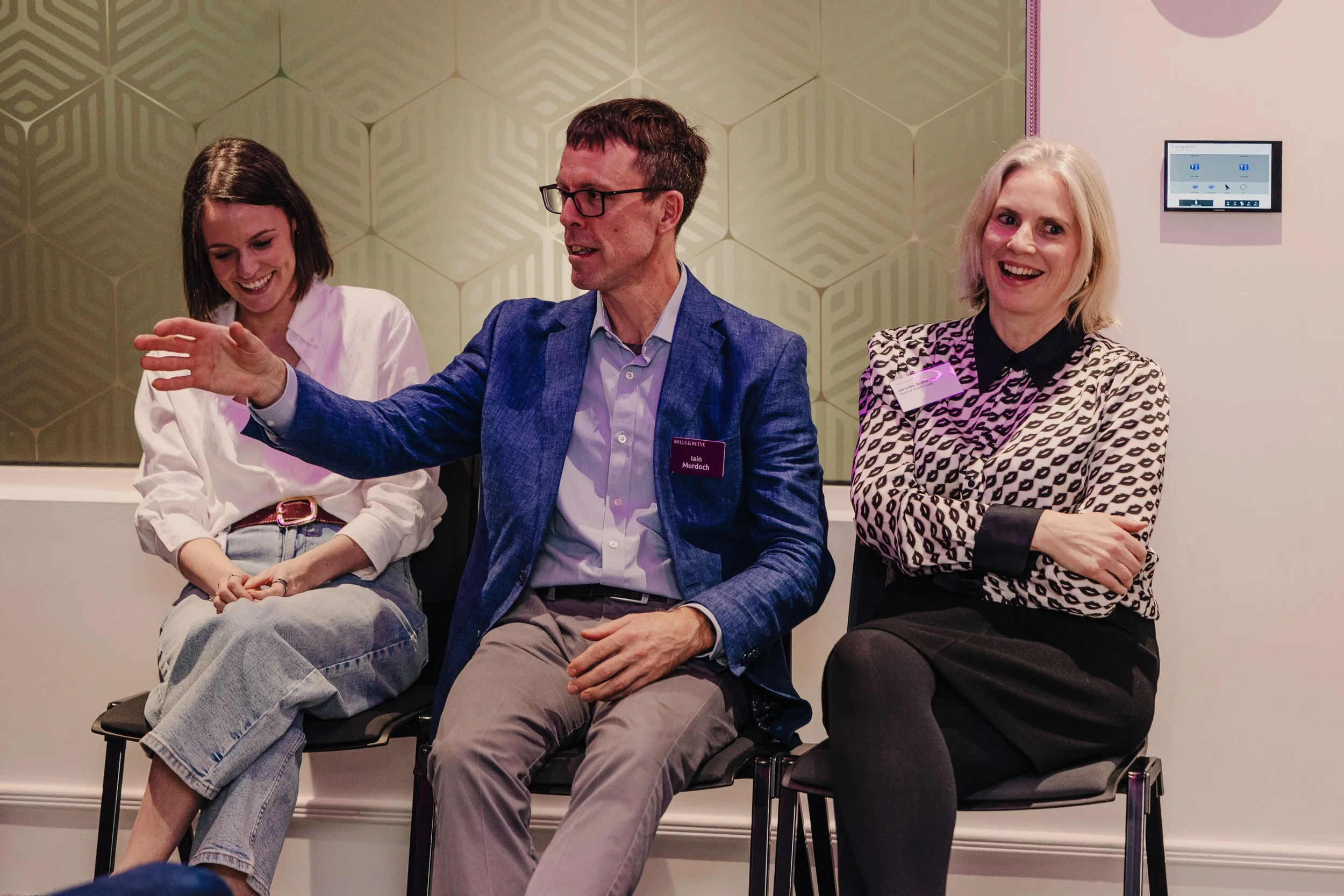
Hannah Bruce, Iain Murdoch & Jennifer Anderson
The human element isn't going away
Hannah Bruce shared a perspective that will resonate with anyone working in customer-facing financial services. The idea of an "AI super app" where a customer never needs to speak to a human may sound compelling in a strategy deck, but the reality is different.
Customers, particularly those in financial difficulty or dealing with complex situations, still want to speak to a person. The panel's view was that AI might handle the start of a conversation, but the human interaction remains essential for the moments that matter most.
The implication for skills is important. Rather than replacing frontline staff, organisations may need to retrain them for deeper, more complex conversations. AI handles the routine. Humans handle the nuanced. That requires a different kind of upskilling: not technical AI training, but enhanced communication, empathy and judgement skills.
Governance is the enabling layer, not the brake
Iain Murdoch brought a legal and governance lens that cut through much of the discussion. His framing of AI delegation was sharp: what am I going to delegate to AI? What do I trust it with? What do I need to retain?
In regulated environments, this isn't a theoretical exercise. Whether it's a law firm generating a client document or a bank making a lending decision, there are points in every process where human discernment is not optional. The skill isn't using AI. It's knowing where AI is appropriate and where it isn't.
Mills & Reeve's approach of creating new roles specifically focused on AI within the firm, and experimenting with AI applications internally before applying them to client work, reflects a maturity that many organisations haven't reached yet.
At Zygens, we position governance as the enabling layer for AI adoption, not the brake. When people understand the boundaries, know what's expected of them, and trust the guardrails, they experiment more freely and adopt more quickly. Governance done well accelerates adoption. Governance ignored creates the paralysis the documentary describes.
What this means for your organisation
The AI Skills Paradox is real. But the solution isn't what most people assume.
It isn't about hiring an army of AI specialists. It's about giving your existing domain experts the understanding, the tools and the permission to work with AI safely and effectively. It's about leaders modelling the behaviour they want to see, not mandating it. It's about building governance frameworks that enable experimentation rather than preventing it. And it's about being honest that AI adoption is an investment, not just a cost-saving exercise.
If you recognise these challenges in your organisation, that's exactly what our Discovery Programme is designed to address. A structured process to identify where agentic AI creates real value, build the governance to deploy it safely, and develop the skills your teams actually need.
Watch the documentary: Harvey Nash's "The AI Skills Paradox: AI is Scaling, Skills are Not" is available now.
Andy Roberts is Co-Founder and CMO at Zygens, the agentic AI company helping regulated businesses move from AI ambition to working systems.
Want to understand where AI can create the most value in your organisation? Find out about the Zygens Discovery Programme.